

 Individual Operational Support
 Individual Operational Support
Embedding practices and behaviors that truly make a difference
Why Does Individual Operational Support really changes practices?
Changing managerial posture, effectively running a steering meeting, using a KPI, organizing a schedule, motivating a team… none of this happens overnight or in theory alone. That’s why our individual support is based on:
- Practical application, at the workplace,
- Sessions focused on real challenges. Typically, 6 to 8 IOS sessions are needed to change behaviors and start embedding new practices.
- Mentors who have faced the same challenges and can engage as equals.
- Personalized follow-up within a framework agreed with the company and the employee’s manager,
- A clear goal of tangible impact, immediately visible in practice..
This is not traditional coaching. It is not just consulting. It is not simply training. It is a standalone approach that bridges your ambitions and measurable results. Our ability to transform on the ground and support people in action is what makes us a different kind of partner, recognized for pragmatism and effectiveness.
Who is Individual Operational Support for?
For anyone looking to gain efficiency and autonomy! IOS can support an employee, a manager, a member of an executive committee, or even an entire team.
It applies to all skills, whether technical or managerial… in factories, support functions, banks, insurance companies, or any service activity.
3 Conditions for Success
To make IOS effective, we identify 3 key success factors.

Check #1: Know where you’re going
The first step is to define expectations from all stakeholders:
manager/participant/consultant.The goal is a shared roadmap with clear objectives and expected results.

Check #2: Build a strong tripartite relationship
IOS is effective only if the manager is actively involved in tracking the participant’s skill development: designing the program, individual follow-ups on objectives, and final review. Their presence at each key stage is essential for success.

Check #3: Individualize the support
Transformation happens through structured individual follow-up (Skills Acquisition Tracking Sheet, framework) and a program of on-the-job practice, feedback, evaluations, and tailored development plans. Because everyone progresses at their own pace, we adapt to the starting point and rhythm of each participant.
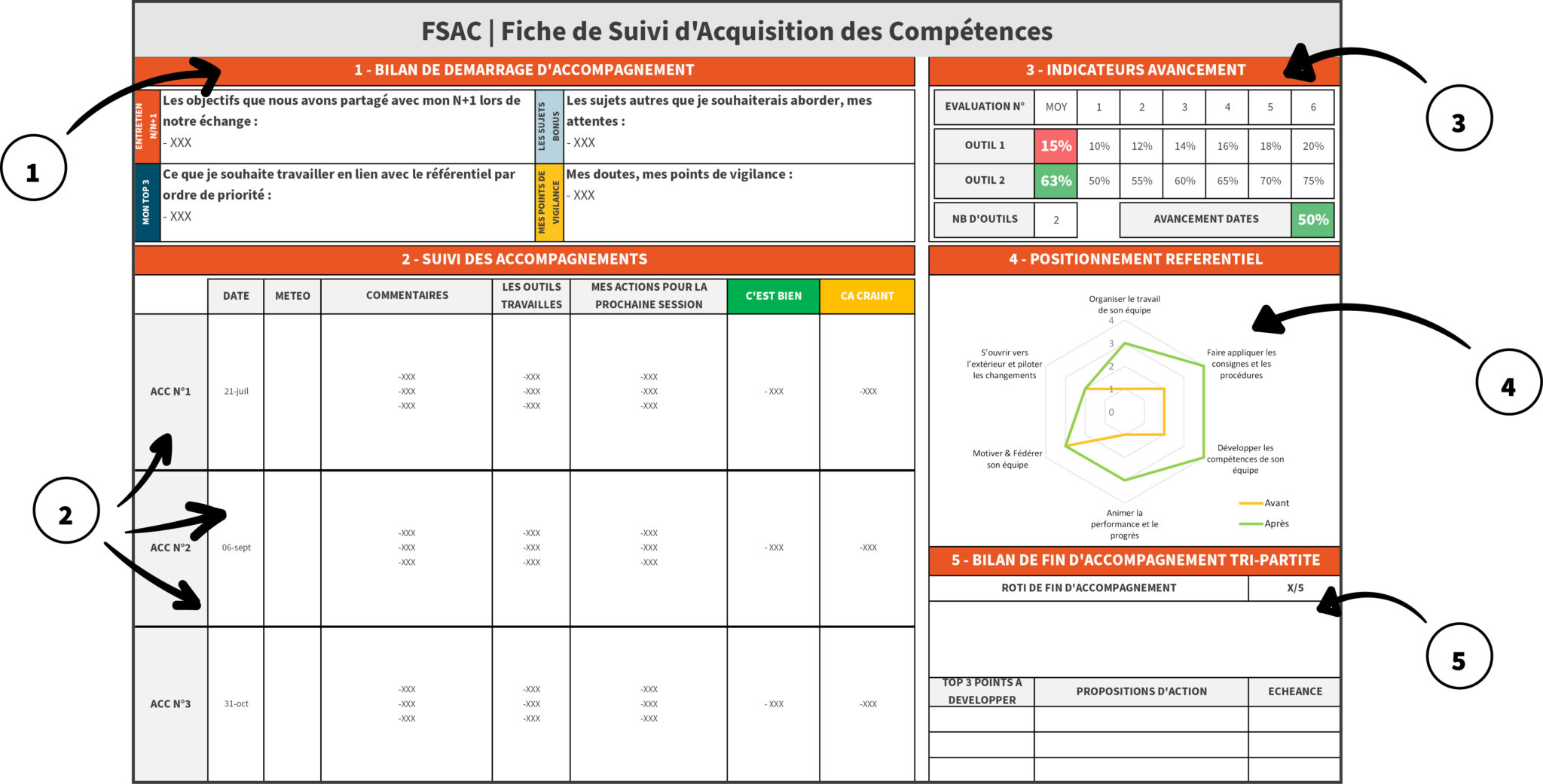
- 1. Summary of the tripartite meeting, followed by the individual assessment during the first coaching session
- 2. Coaching follow-up: scheduling, participant feedback, tools used, actions taken, and session summary
- 3. Tracking the maturity of implemented tools and progress of the coaching process
- 4. Evolution of alignment with the competency framework: before and after coaching
- 5. Summary of the tripartite closing meeting and completion of the coaching engagement
Designing the Support Strategy
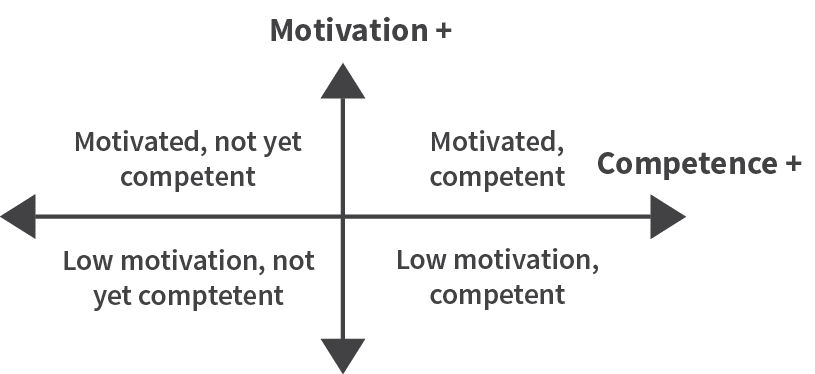
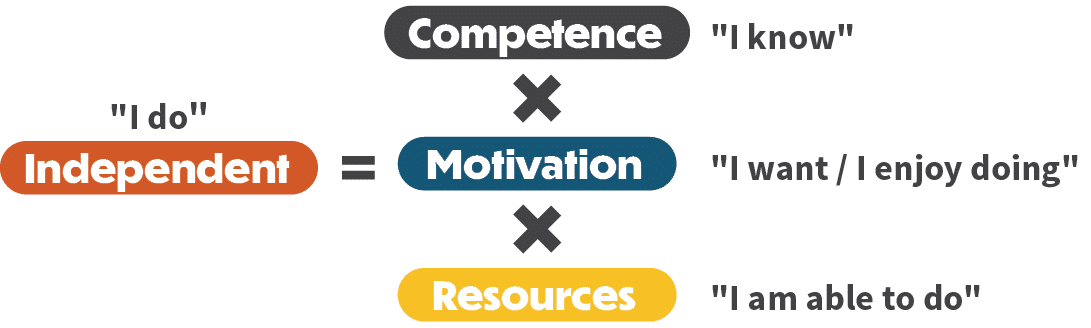
The support strategy takes into account the participant’s skill level (vs. the framework) and motivation, allowing us to tailor the resources provided. These 3 factors are interconnected and must be adjusted to make IOS effective and valuable for both the employee and the company.
How does Individual Operational Support works?
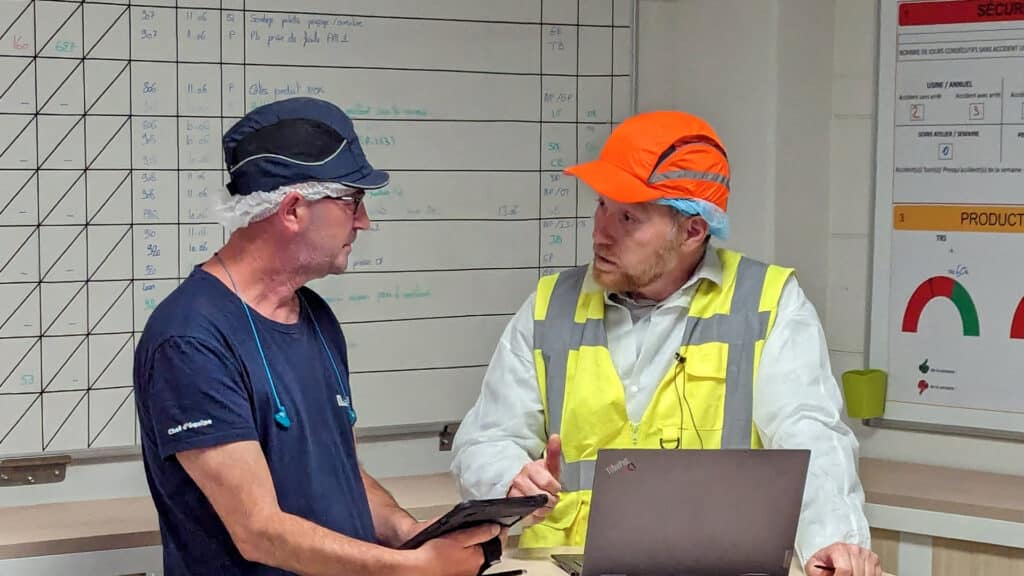
The mentor’s role is to both provide expertise through feedback and encourage reflection through active listening and questioning. They are not there to give answers or do the work for the participant—they are a guide through challenges!
Preparatory step (30 min)
→ Experience review, reflective analysis
Between sessions, the participant notes experiences they want to discuss with the mentor (successes or challenges).
This session takes place in a quiet room. Its purpose is to gauge the recent period and review the experiences the participant wishes to discuss.
The mentor encourages the participant to examine and understand the situation from a different perspective (reflective analysis) through active listening and open-ended questions.
Goal: Help the participant find their own solutions to challenges if they arise again and/or guide them in applying tools already shared in group training sessions.
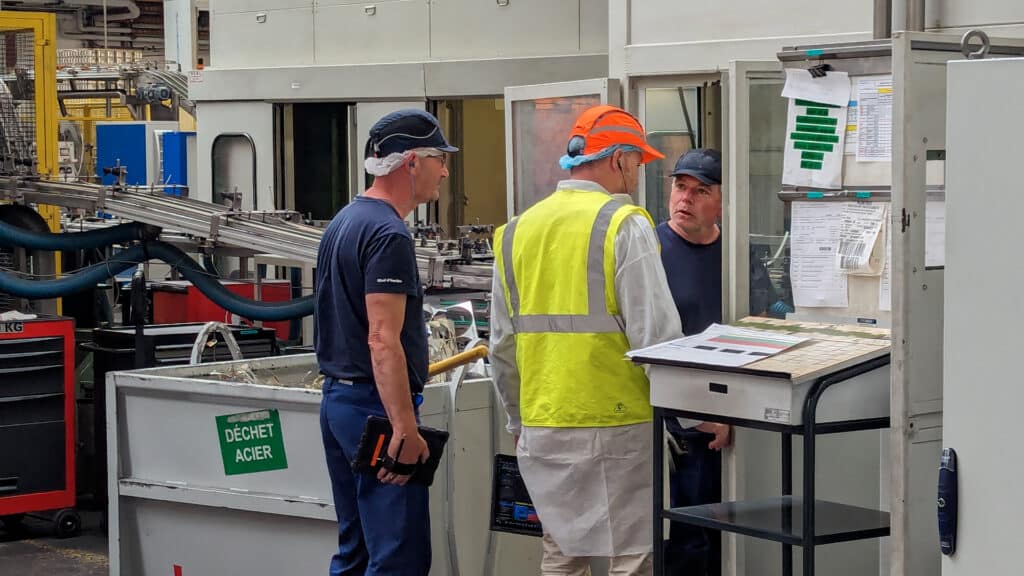
Application in real situations (2h–2h30)
→ Shadow coaching + feedback
The participant and mentor go to the workplace. The participant carries out the planned actions, aiming to apply best practices and make the necessary adjustments as discussed in the first part of the support. The mentor observes without intervening (shadow coaching).
After the on-the-job session, through reflective analysis and feedback, the mentor either reinforces the participant’s approach or helps adjust practices gradually (for example, through simulations).

Debriefing (30 min)
→ Summary + Debrief
(with the Manager)
After the Individual Operational Support session, the participant and mentor return to a quiet room! This is the moment to summarize all events experienced on the job.
The mentor and participant jointly define actions to be taken before the next IOS session and complete the Skills Acquisition Tracking Sheet (SATS). Together, they decide what will be shared with the manager (recorded in the SATS) and what will remain confidential.
Finally, a debriefing is held with the manager. This essential step serves as a handover between the mentor and the manager. It highlights the participant’s positive developments and successes while clearly communicating areas to be followed up by the manager until the next support session.
Client Testimonials
Together, we have turned their ambitions into lasting results

Videos
Elivia: HR Deputy Director’s testimony
Catherine Chalumeau, HR Deputy Director, discusses the “Management by Elivia” project, intended to establish a lasting managerial culture

Videos
Aqualande Group: Industrial Director’s testimony
Damien Sicot, Industrial Director, talks about Aqualande’s new industrial organisation project focused on a strong management of its team leaders.

Videos
Adisseo: Industrial Performance Program Director for Europe’s testimony
Stéphane Chalut-Natal, Industrial Performance Program Director for Europe, explains Adisseo’s industrial performance project.

Let’s talk about your projects
Our experts are ready to support you in designing the solution tailored to your needs.